
What Stefanie Santiago Won by Losing Twice
What Stefanie Santiago Won by Losing Twice
Stefanie Santiago ran for a council seat in Bloomfield, New Jersey, in 2025 and again in 2026. Here’s what she built along the way.
The letter from the township engineer told Stefanie Santiago and her wife how their sidewalk had to be fixed and by when. It didn’t mention that the roots pushing up the concrete belonged to the town’s own trees.
Stefanie is a mental health clinician and small business owner in Bloomfield, New Jersey. Until then, she’d never contacted local government about anything. She reached out to her council representative, who handled it. But the fix only covered her house. The ordinance behind the letter stayed the same, and that bothered her more than the sidewalk ever had.
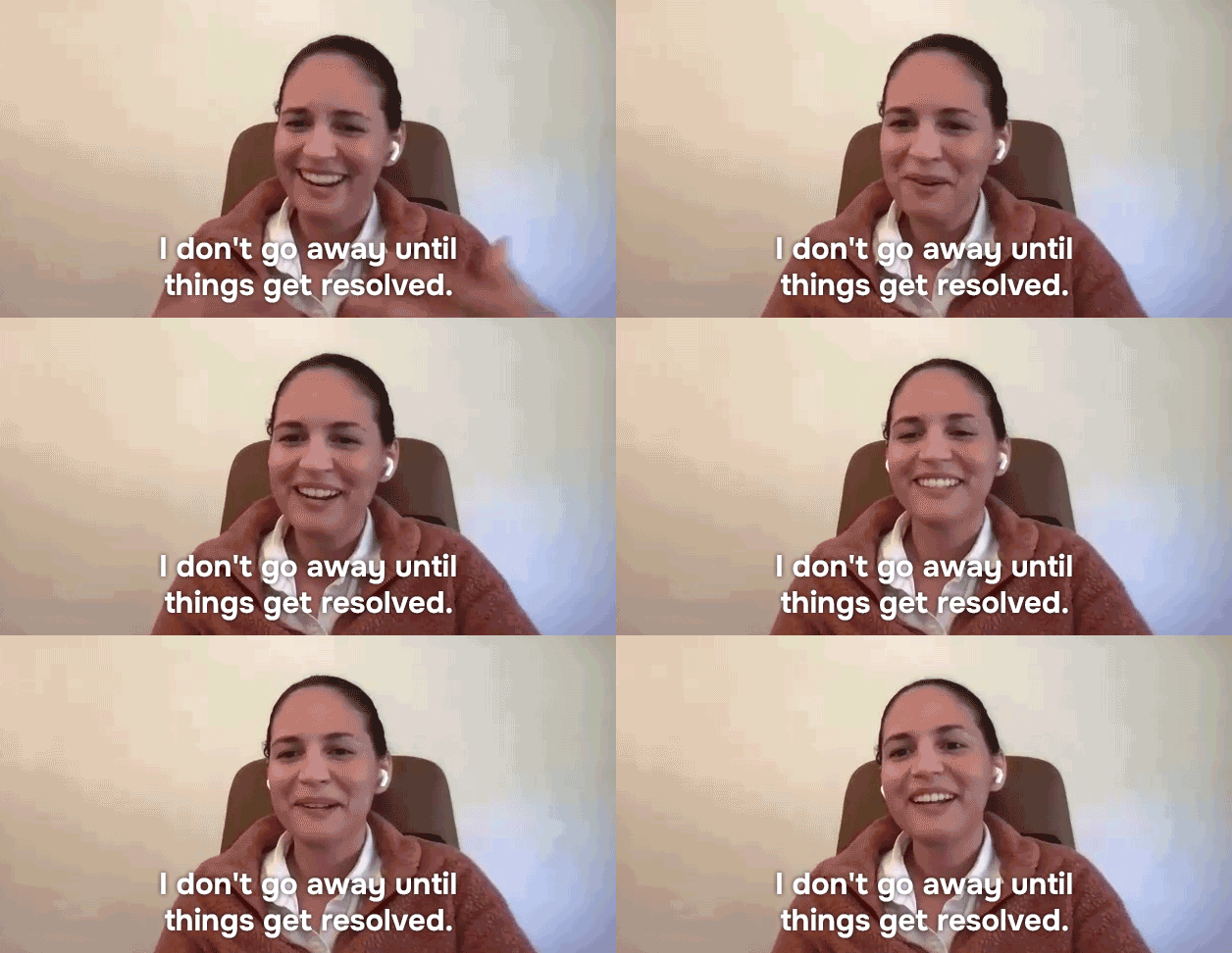
So she started going to council meetings. She asked about the sidewalk, noticed her concerns growing, then questioned how decisions got made at all. At first, nobody seemed very interested in addressing her questions. She kept going anyway. “I don’t go away until things get resolved,” she told a group of Local Leader Lab members this fall.
Deciding, and deciding again
It took about two years of questions before running felt like a real possibility. By then Stefanie was a new parent, thinking hard about the town her son would grow up in. She ran for her ward’s council seat in 2025, without the backing of the local party organization, and lost by 12 percentage points.
The harder call came next. Voters had just made a choice, and part of her wanted to respect that and step back. Then someone she’d met at a community meeting offered another way to see it. People often run more than once, he told her, and each election reflects what voters care about for that specific term. It’s not a final judgment on the candidate or a permanent installation of the incumbent.
She ran again in 2026, against the same incumbent. This time a U.S. senator, a member of Congress, a state Senator, and municipal leaders endorsed her, and she cut the margin to 7.5 points.
What two campaigns gave her
When Stefanie spoke with Lab members, she said she hoped they’d walk away “maybe redefining what winning even means.” Then she talked about what she’d gained.
She understands her town now in a way she didn’t before. She hardly knew much about local government. “And now I feel like I know too much,” she said Her second campaign was more organized than her first. She set up her campaign finances as soon as she announced, built her own canvassing map from voter data she requested from the county, and shared a calendar with volunteers so everyone knew where to be.
She also talked about the people she met along the way. “I have created really great relationships based on values,” she said, and those relationships haven’t stayed hers alone: “I build connections that have allowed others to also understand their powers better.” She’s still organizing in her community today.
Her own summary was short. “The ability to serve doesn’t change, right?”
Questions worth asking yourself
If you’re thinking about a first step and the idea of losing is the loudest thing in your head, it helps to keep a different kind of score. Stefanie’s experience suggests a few questions worth coming back to every few months:
- What do I understand about how decisions get made in my community that I didn’t understand before?
- Who do I know now that I didn’t know a year ago, and do we share values?
- Who around me has a clearer picture of their own power because I showed up?
It’s also worth borrowing the advice that got her back on the ballot. Whatever you try, whether it’s a meeting, a project, or a campaign, judge the result against the moment it happened in, and decide what comes next with that in mind.
Where it started
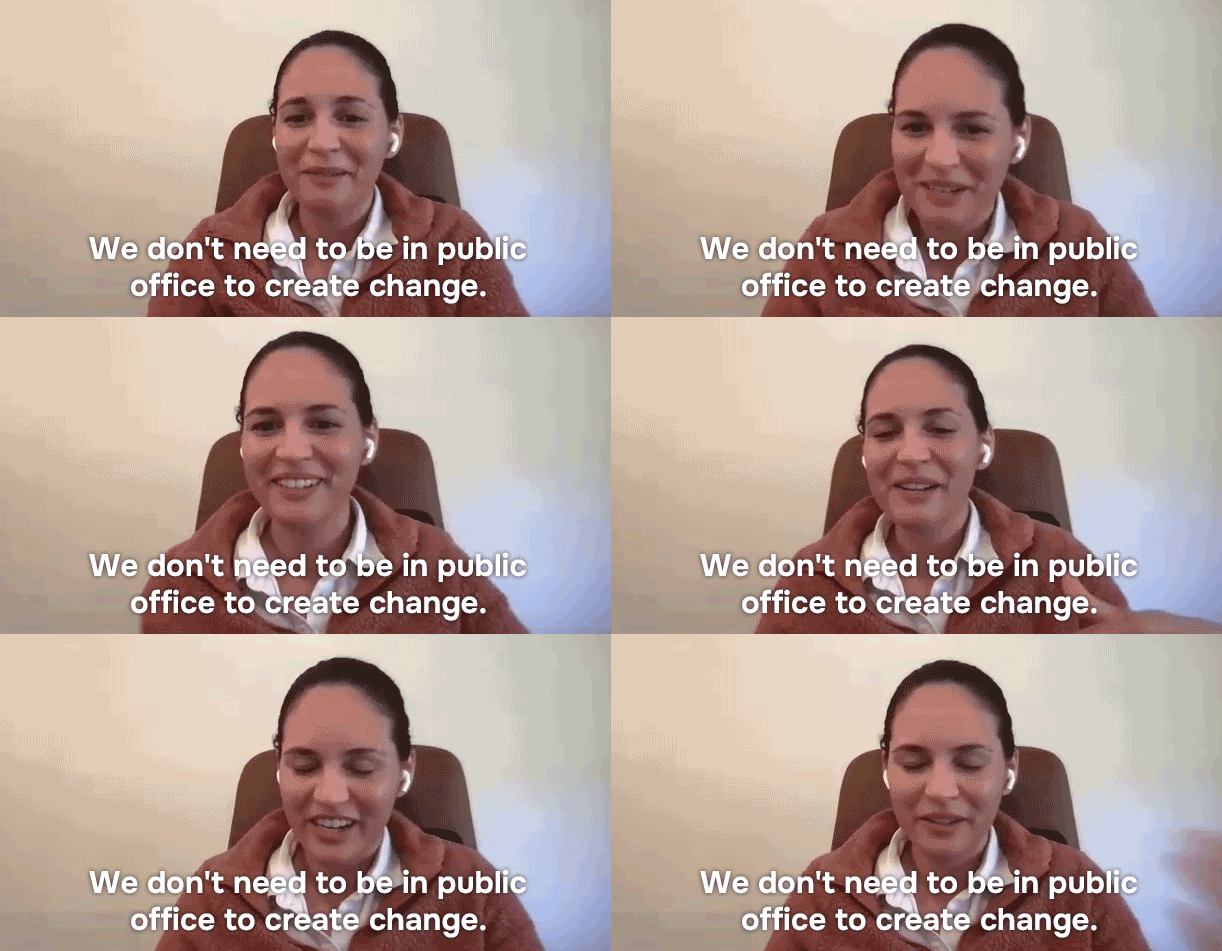
Stefanie was part of the Local Leader Lab’s inaugural cohort in fall 2025, and one idea from the Lab stayed with her between campaigns: “We don’t need to be in public office to create change.”
Her path started with a letter about a sidewalk and a decision to keep asking questions. Yours might start somewhere just as ordinary: a council meeting, a question nobody else in the room thought to ask, a neighbor who’s been wondering the same thing. Whatever happens on election night, if you ever get there, everything you build along the way is yours to keep.