Our Summer Cohort Wrapped: What Six Weeks Taught Us About Time, and About Each Other
Our Summer Cohort Wrapped: What Six Weeks Taught Us About Time, and About Each Other
The sessions are over. The work is not. What we learned running the Local Leader Lab in six weeks instead of ten.
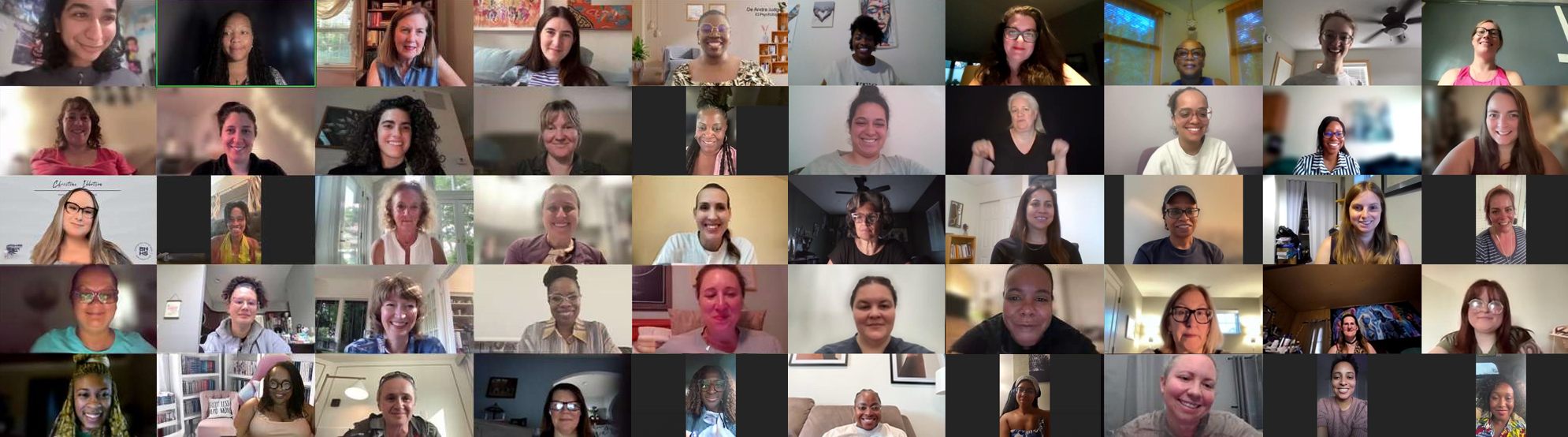
On the first night, everyone was asked to type three things into the chat. Name, where you are, and the emotion that brought you.
The locations were all over the map. Westport Island, Maine. Compton, California. Newark. Montpelier, Vermont. Quad Cities, Iowa and Illinois. The mountains of western Pennsylvania. Savannah, Canton, Belton, and Chicago several times over.
The emotions were harder to sort. A few women wrote determined and a few wrote hopeful, someone in the Quad Cities wrote exhausted, and a woman in Brooklyn said she was anxious in a good way. Anger came up more than once. A participant in Washington state offered “franger,” frustration and anger fused into one word, which I have not been able to stop using since. Somebody in Philadelphia had World Cup fever. One woman watched the answers scroll past, typed “Oops, emotion. Reflective??? If that’s an emotion.”
A woman in New Orleans, who had warned us she had a three-year-old and a four-year-old likely to wake up mid-session, typed “motivated.” Thirty seconds later she added: tired of being ignored.
And a woman in Compton typed a single word. Calling.
Every one of them had said yes to something we were not at all sure was going to work.
The bet
The summer cohort was an experiment. Six live sessions back to back instead of ten spread across ten weeks, a group deliberately smaller than our spring cohort, running through July and early August, which is not when anyone would tell you to launch a leadership program.
We had two reasons. Our own capacity looks more stretched in the summer, and I don’t believe in pretending otherwise. We also know that summer does something unpredictable to the calendars of women who are already carrying a lot. For some of them it opens time up. For others it takes every hour they had. We wanted to know whether a compressed format could meet either one.
What we did not know was whether anyone would want it, or whether the women who said yes would still be there at the end.
What they built with each other
They were already talking before we hit record. A group chat was formed prior to the first virtual session, and women were introducing themselves and naming what they had come to work on, which turned out to be data centers and food pantries and community gardens and more.
Then they got to work, and our facilitators, De Andra, Andrea, and Ornella, reported inspiring levels of enthusiasm. Women finished sessions and went straight back to the group chat. One signed off from a session by announcing, to nobody in particular, that she had just sent a hundred emails. They kept asking for more time in breakout rooms, which is not a complaint we mind receiving.
Here is the part we underestimated, and the part alumnae talk about more than any piece of the curriculum. What they valued most was each other.
One woman sat in a breakout with someone who lives twenty minutes away from her and came out struck by how differently power works in their two communities. A woman in New Jersey found someone in her own county. Another spent enough time in that local room that she has since met several of those women in person. A woman in Chesapeake, Virginia told us what she is walking away with is that there are women all over her state she can now reach out to for advice or moral support, and women outside it who can point her toward resources.
When women tell us why they would send a friend here, community is what they name.
What surprised us about time
More than fifty women completed the accelerated summer cohort with a plan and a commitment to act where they live. What we did not expect was the reason they gave.
We had thought of compression as a tradeoff. Less time to sit with the material, less runway between sessions, a version of the Lab that asked women to give up depth in order to fit it into a summer. The women who went through it described something close to the opposite. One shared that she prefers the accelerated format because it makes her get the work done, and that she tends to procrastinate when she has too much time. Another said she was building her next steps up less in her head. A third was specific about what a longer calendar would have done to her: “If it had been the same content stretched longer, I would have been more likely to drop behind, rationalizing I had time to catch up.”
One called it the goldilocks zone.
We have spent three cohorts adjusting the length of this program. Twelve weeks for our inaugural group. Ten for the spring. Six for the summer. What those responses made us reconsider is what I thought the extra weeks were buying. We had assumed we were giving women more room to get ready. For at least some of them, the extra weeks were just more time to put it off.
The pace was also only half of what we were testing. The other half was the season. Some of these women are teachers. Some have work that thins out in July. Summer is the only opening they get all year, and a ten week program starting in September would not have reached them no matter how well we designed it.
It did not land that way for everyone. One woman told us the pace produced the opposite of momentum and left her feeling rushed. Another named the tradeoff more precisely than we had: the adrenaline of moving fast is real, and so is the depth you lose when it wears off. Both of those are going into how we design the next one. Six weeks was right for the women who chose a summer session, and we’re going to keep building on why that worked for that specific group.
The thing we actually learned
The bigger shift in our thinking had less to do with six weeks versus ten than I expected.
For three cohorts we have been debating the length of the curriculum as though the curriculum were the program. Watching the last two groups move through a compressed version made it obvious that it never was.
Phase one is the curriculum. Virtual sessions, assignments, power mapping, facilitators. That is the part we have been timing and retiming.
Phase two is activation, when a woman takes her plan off the shared space and into her actual community, with her facilitator and her accountability partner still in it with her. That can run two months.
Phase three is the alumnae network, where she keeps access to the women and the resources after the structure ends. That one has no end date. It is close to two hundred women now.
The facilitators carry across the first two. When the sessions ended in early August, De Andra, Andrea, and Ornella were still in it, and they still are.
Once we started seeing it that way, the length of phase one stopped being the interesting question. It also explained something we had been treating as a scheduling problem. Our summer cohort is not finished. They are in phase two right now, and they will be through September and, for the women who need it, into October.
Examples of where they are
Lauren went to her town’s Board of Commissioners meeting and gave public testimony against a proposed data center. What she learned in that room is that the rezoning had been agreed to more than a year earlier, before data centers became the thing everyone is now paying attention to. She joined about ten neighbors who have organized since, and named the next problem herself. It cannot stay ten people.
Ebony came into the summer cohort already serving on a commission working on homelessness. For her field visit she sat in on one of its July meetings and came out fixed on a single gap. Her state’s goal of ending chronic homelessness by 2035 requires five to six hundred new permanent supportive housing units a year. The two developments on the table that month added eight units each.
She had arrived at the Lab planning to build something new. Here is what she wrote at the end:
“I came into the Lab thinking my job was to build something new… Now I know the real work is representation, making sure a program already proving itself statewide actually reaches the county I call home.”
Christine, California
That turn comes up constantly in this program. Women arrive certain they have to invent something from nothing, and often the most useful thing available to them is something already running that needs more weight behind it.
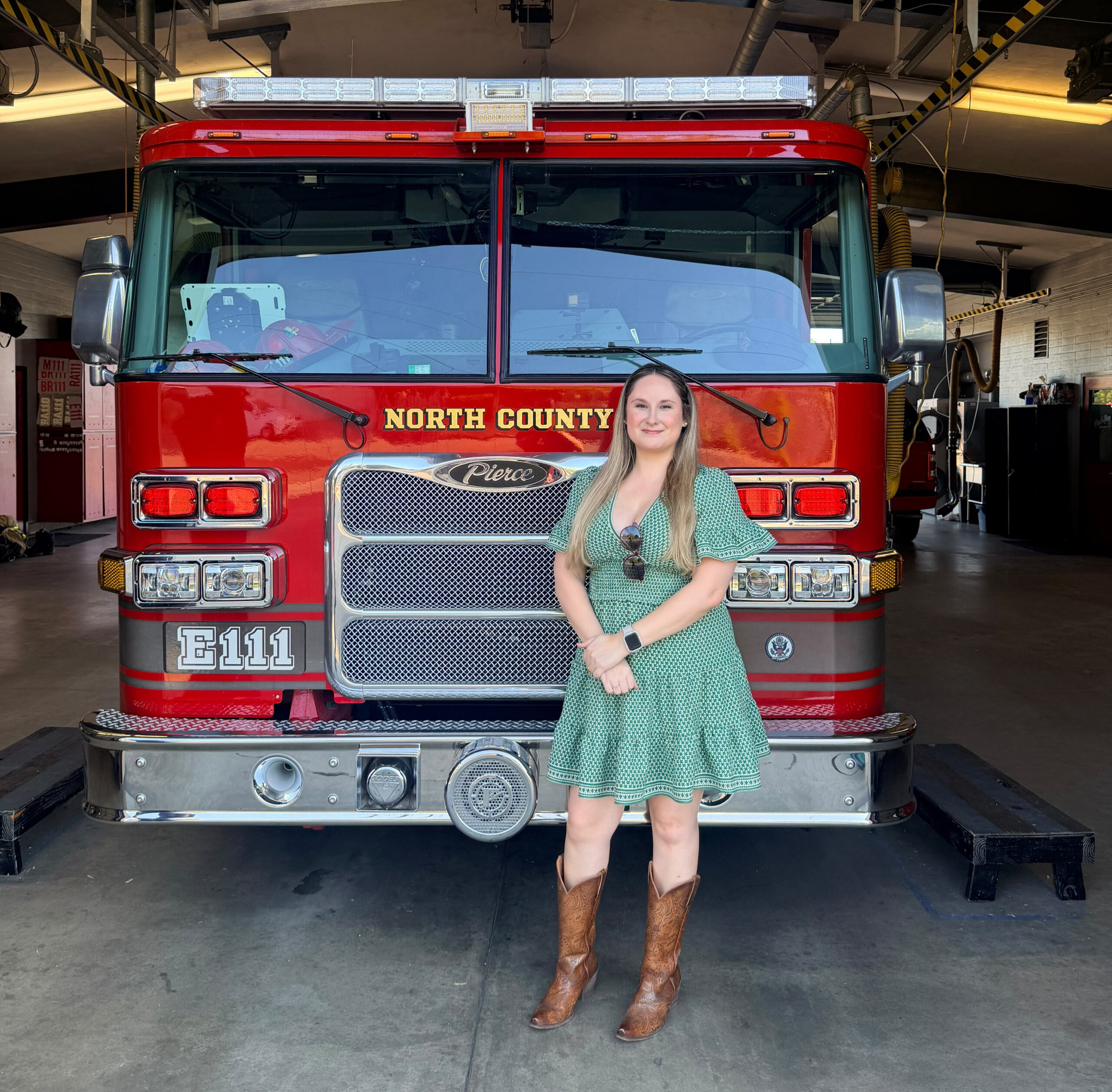
Christine lives in a fire risk community in Southern California with two roads in and out of town, which are technically the same road. School letting out backs them up for twenty minutes. Her question to the cohort was what happens in a real fire. She was evacuated from one years ago, and as she described it, you do not understand until someone asks what you want to take from your entire life in the next twenty minutes. She had been deciding between offices. She landed on fire safety and filed for a seat on her fire protection district board, and by the final session she wrote that she had come in thinking she was not ready to run, and now knows what it feels like to have her name qualified for the general election ballot.

LaQuisha, North Carolina
LaQuisha had been in an earlier cohort. Partway through this one she recognized a voice in the room and typed a friend’s name into the chat in all caps, and it turned out they had been in that earlier cohort together. As she wrote at the end: “I came BACK into the lab thinking, I have to finish what I started.”
She narrowed a long list of ideas down to one, which is helping people understand how decisions made locally and at the state level shape whether they can get health care. She made a badge for it. Vote like your health depends on it.
What comes next
Our fall cohort kicks off this week. It is the largest group we have ever run, and we are running it accelerated again for a calendar-specific reason. We want these women through phase one before the midterm elections.
We are not declaring six weeks the new standard. There is a real chance we go back to ten, because ten gives women more breathing room and I would rather build that space in on purpose than discover later that we needed it.
The summer group also gave us a list. More time in breakout rooms, which came up more than any other note. A way to keep returning to the same women session after session, because several told us those conversations got better every time and they wanted to keep building instead of starting over with strangers. More of both kinds of grouping, geographic and issue-based, since the women who found someone in their own county and the women who found someone working on their own issue both wanted more of what they got. Somewhere to store the resources that get shared in sessions, because right now you have to catch them in your notes or lose them. And more structure during phase two, which several women told us they worry about drifting through once the weekly rhythm ends.
The midterms are a deadline for phase one and nothing else. The women in our alumnae network will still be running voter registration tables, sitting on commissions, restarting committees that had gone dormant, and showing up at meetings where a decision has already been made once and can be made again.
If you want to watch the fall cohort from the inside, the Lab Report is where that happens. It is where you will meet these women while they are still in it, still in the wrestle of working out what their next steps look like.
And if you are reading this thinking you might want a seat of your own, our 2027 cohorts are already in the works. Get on the waitlist and we will come find you.